
NAATI Estonian Translator for Marriage Certificate Translation
Email us directly or upload your documents here for translation:Canberra
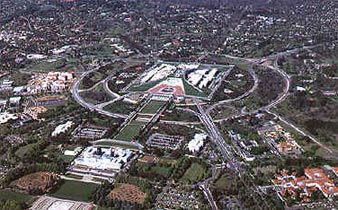
Canberra is the capital city of Australia. With a population of over 345,000, it is Australia's largest inland city and the eighth-largest city overall. The city is located at the northern end of the Australian Capital Territory (ACT). A resident of Canberra is known as a "Canberran". The site of Canberra was selected for the location of the nation's capital in 1908 as a compromise between rivals Sydney and Melbourne, Australia's two largest cities. It is unusual among Australian cities, being an entirely planned city.
Estonian Marriage Certificate Translation for Canberra
 Getting your marriage certified translated for official use in Canberra is easy. Our NAATI certified Estonian translators are ready to assist you and everything can be done online.
- Leading provider for NAATI certified Estonian translation
- Fast Estonian translation with no extra charges
- Experienced NAATI certified translators based in Australia
Estonian NAATI Translators
Canberra Document Translation Services
 Get professional document translation for personal or business use. Our translators can handle any type of financial, technical or medical document, with the support of a specialised language DTP team for typesetting translations into design material such as brochures, product packaging and technical reports.
All documents received are confidential. Get in touch today for any translation requirement.


More about the Estonian Language
Estonian is the official language of Estonia, spoken by about 1.1 million people in Estonia and tens of thousands in various émigré communities. It is a Uralic language and is closely related to Finnish. Estonian belongs to the Finnic branch of the Uralic languages, along with Finnish, Karelian, and other nearby languages. The Uralic languages do not belong to the Indo-European languages. Estonian is distantly related to Hungarian. Like Finnish and Hungarian, Estonian is a somewhat agglutinative language, but unlike them, it has lost the vowel harmony of Proto-Uralic, although in older texts the vowel harmony can still be recognized.