NAATI Serbian Translator for Marriage Certificate Translation
Email us directly or upload your documents here for translation:Melbourne
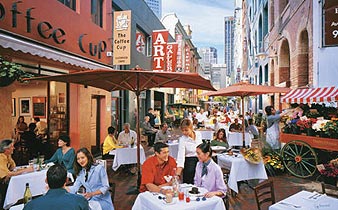
Melbourne is the capital and most populous city in the state of Victoria, and the second most populous city in Australia after Sydney. The Melbourne City Centre (also known as the "Central Business District" or "CBD") is the hub of the greater geographical area (or "metropolitan area") and the Census statistical division-of which "Melbourne" is the common name. Melbourne was founded in 1835 (47 years after the European settlement of Australia) by settlers from Launceston in Van Diemen's Land. It was named by Governor of New South Wales Sir Richard Bourke in 1837, in honour of the British Prime Minister of the day, William Lamb, 2nd Viscount Melbourne. During the Victorian gold rush of the 1850s, it was transformed into one of the world's largest and wealthiest cities.
Serbian Marriage Certificate Translation for Melbourne
 Getting your marriage certified translated for official use in Melbourne is easy. Our NAATI certified Serbian translators are ready to assist you and everything can be done online.
- Leading provider for NAATI certified Serbian translation
- Fast Serbian translation with no extra charges
- Experienced NAATI certified translators based in Australia
Serbian NAATI Translators
Melbourne Document Translation Services
 Get professional document translation for personal or business use. Our translators can handle any type of financial, technical or medical document, with the support of a specialised language DTP team for typesetting translations into design material such as brochures, product packaging and technical reports.
All documents received are confidential. Get in touch today for any translation requirement.

More about the Serbian Language
Serbian is a form of Serbo-Croatian spoken by Serbs in Serbia, Bosnia and Herzegovina, Montenegro, Croatia, Albania, and neighbouring countries. In particular, Serbian is standardized around Šumadija-Vojvodina and Eastern Herzegovinian subdialects of Shtokavian. The other dialect spoken by Serbs, Torlakian, is spoken in southeast Serbia. Serbian is the only European language with active digraphia, using both Cyrillic and Latin alphabets. The Serbian Cyrillic alphabet was devised in 1814 by Serbian linguist Vuk Karadžić, who created the alphabet on phonemic principles.
Serbian is a form of Serbo-Croatian, a Slavic language (Indo-European), of the South Slavic subgroup. Serbo-Croatian consists of Serbian along with Bosnian, Croatian, and Montenegrin. It has lower intelligibility with the East South Slavic languages Bulgarian and Macedonian, than with Slovene (although Slovene is part of the West subgroup, it is hindered by differences in vocabulary, grammar and pronunciation to the Serbo-Croatian standard forms, and is closer to the Serbo-Croatian Kajkavian and Chakavian dialects.