Global Translation Services
Submit your documents for a free quote
Dublin Translators
Language Masters Pty Ltd is a full services language translation provider for over 30 languages. We provide you with document translations wherever you are based around the world. Whether it's personal document translation or translation for business use, our professional translators are ready to assist. Some of our locations:
- Australia Translation Service
- Kuala Lumpur Translation Service
- Jakarta Translation Service
- London Translation Service
- Beijing Translation Service
- Los Angeles Translation Service
- Boston Translation Service
- Chicago Translation Service
- Seattle Translation Service
- Houston Translation Service
- Vancouver Translation Service
- Riyadh Translation Service
The languages we translate:
| Afrikaans | Chinese | Czech | Slovenian | Hebrew |
| Croatian | Hungarian | Mongolian | Swedish | Slovak |
| Arabic | Dari | Hindi | Serbian | Spanish |
| Danish | Dutch | Indonesian | Icelandic | Turkish |
| Estonian | Italian | Polish | Tagalog | Norwegian |
| Finnish | French | Japanese | Persian | Portuguese |
| Bosnian | German | Latvian | Punjabi | Ukrainian |
| Bulgarian | Russian | Korean | Thai | Urdu |
| Malay | Romanian | Vietnamese | Greek | Macedonian |
Dublin
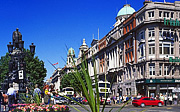
Dublin; Irish: Baile Átha Cliath, meaning "town of the hurdled ford", is the capital and most populous city of Ireland. The English name for the city is derived from the Irish name Dubhlinn, meaning "black pool". Dublin is situated near the midpoint of Ireland's east coast, at the mouth of the River Liffey, and at the centre of the Dublin Region.
Originally founded as a Viking settlement, it evolved into the Kingdom of Dublin and became the island's principal city following the Norman invasion. The city expanded rapidly from the 17th century, and was briefly the second largest city within the British Empire and the fifth largest in Europe. However, Dublin entered a period of stagnation following the Act of Union of 1800, but remained the economic centre for most of the island. Following the partition of Ireland in 1922, the new parliament, the Oireachtas, was located in Leinster House. Dublin became the capital of the Irish Free State, and later the Republic of Ireland.
Similar to the other cities of Cork, Limerick, Galway, and Waterford, Dublin is administered separately from its respective county with its own city council. The city is listed by the GaWC as a global city, with a ranking of Alpha-, placing Dublin among the top 30 cities in the world. It is a historical and contemporary cultural centre for the country, as well as a modern centre of education, the arts, administration, economy, and industry. Since 1997, the landscape of Dublin has changed immensely. The city was at the forefront of Ireland's rapid economic expansion during the Celtic Tiger period, with enormous private sector and state development of housing, transport and business.1